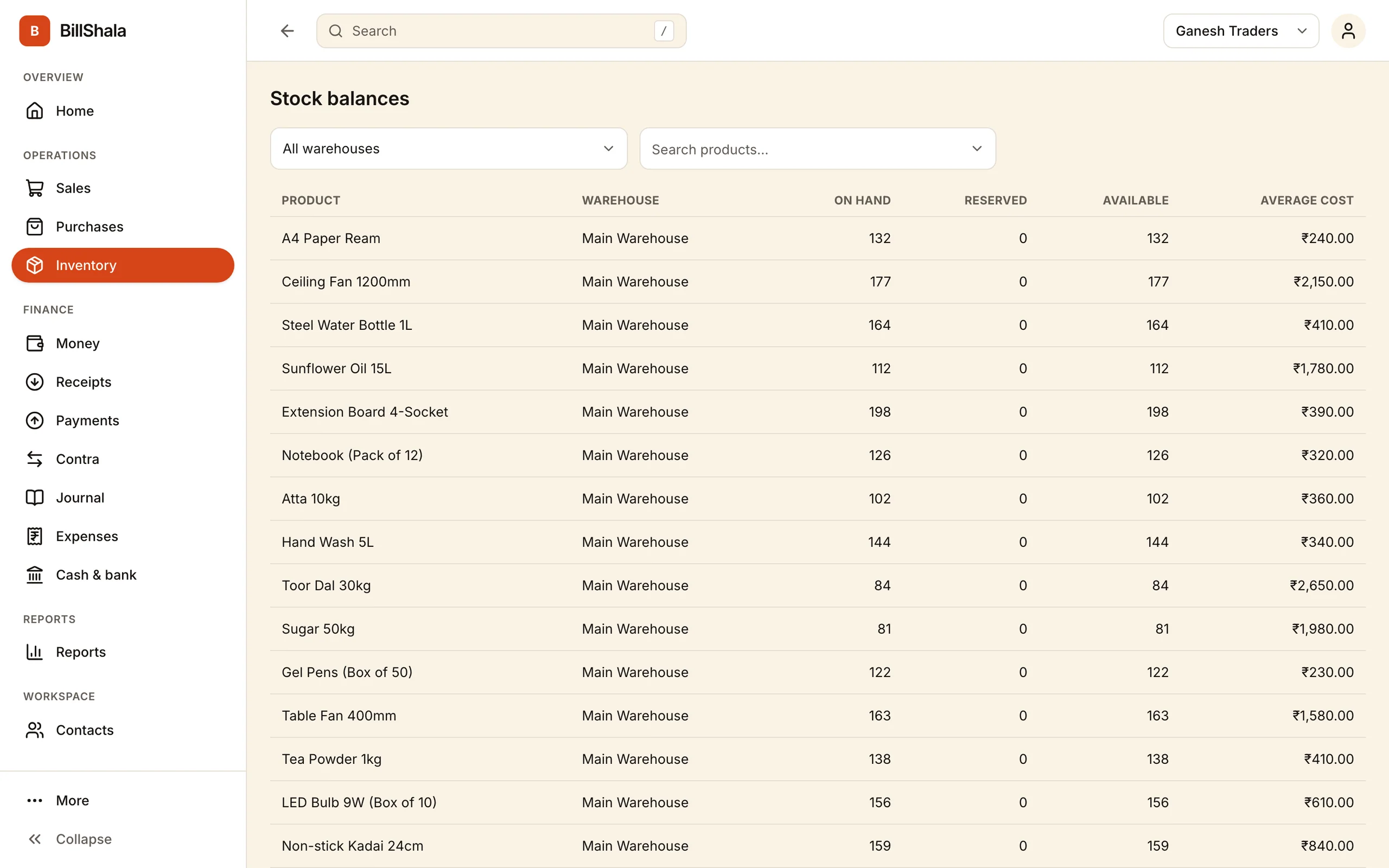
Stock by warehouse
On hand, reserved and available quantity with average cost for every product.
Every sale reduces stock and every purchase adds to it — no separate stock register. See what is on hand in each warehouse, what it cost and what it is worth, and catch low stock and expiring batches early.
What you get
On hand, reserved and available quantity with average cost for every product.
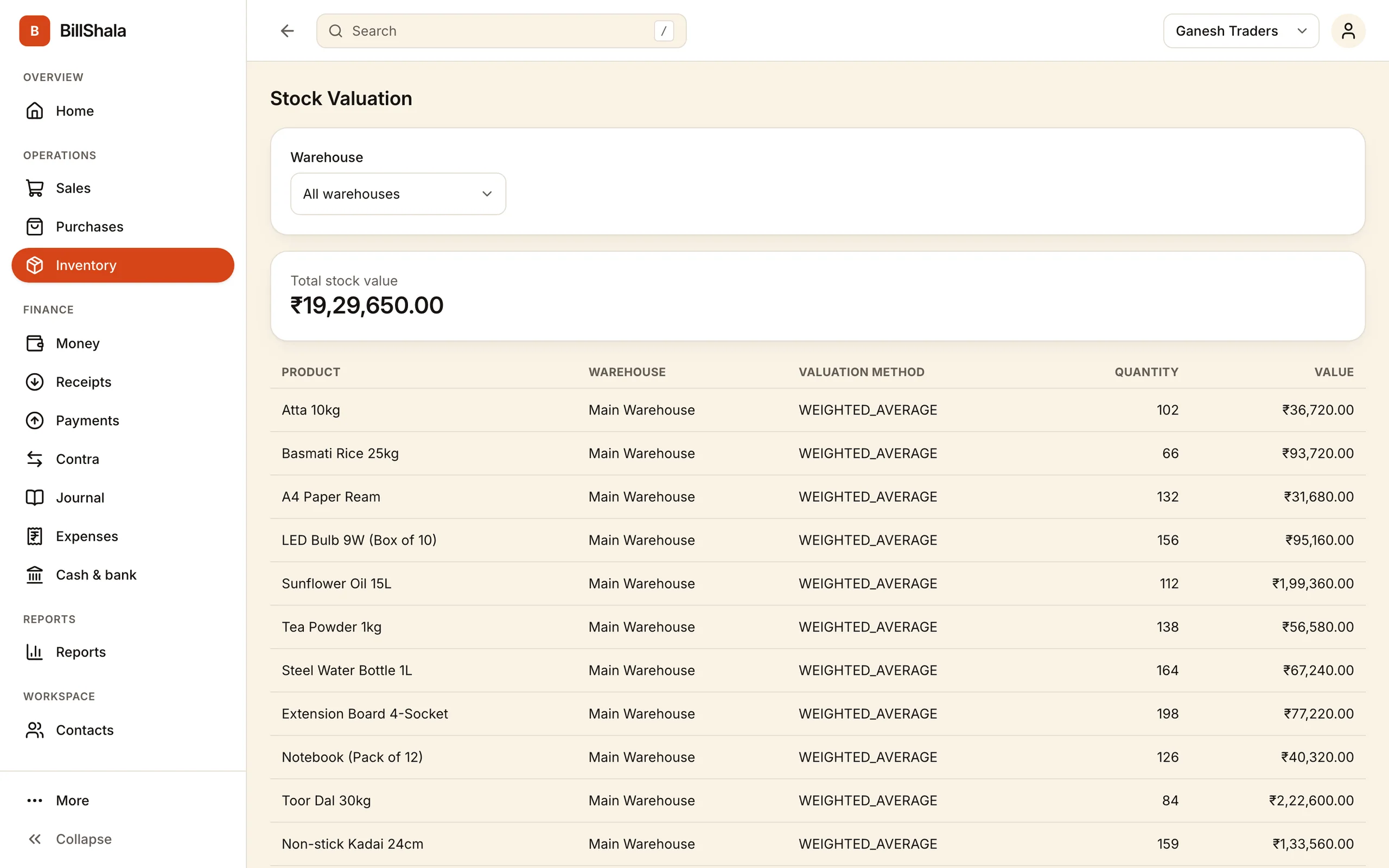
Total stock value and item-wise value using the weighted average method.
Every movement in and out of an item, traced to the document that caused it.
Dedicated reports so you reorder in time and sell older batches first.
Multiple warehouses and branches, with stock transfers and stocktakes.
SKU and barcode, categories and brands, selling price and margin.
Pricing
Or ₹3,999/year — about ₹333/month. Billing, inventory, accounting, GST and reports are all included, on web and mobile. Try it free for 7 days, no credit card needed.
Start 7-Day Free TrialYes. A posted sales invoice reduces stock and a purchase invoice increases it, in the warehouse you choose on the document.
Yes. BillShala has batch, serial number and expiry reports alongside the low-stock report.
Yes. Add multiple warehouses and branches, see stock by warehouse and move stock between them with transfers.